

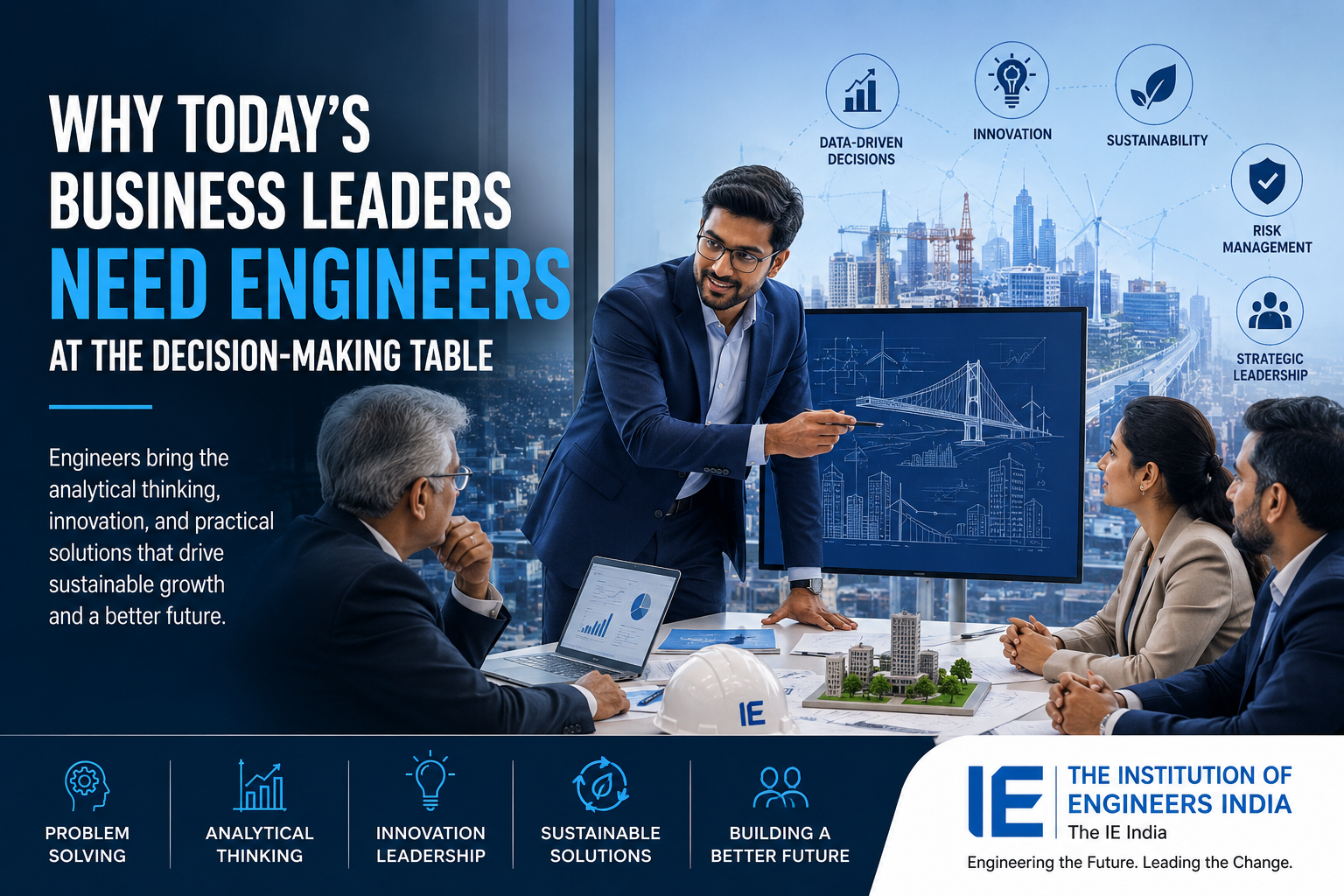
In today’s rapidly evolving world, businesses face increasingly complex challenges. From digital transformation and sustainability goals to infrastructure development and technological innovation, organizations are expected to make decisions that are both strategic and practical. This is where engineers bring exceptional value.
Traditionally, engineers have been viewed as technical experts responsible for designing systems, solving operational problems, and ensuring project execution. However, modern business environments require much more than technical expertise. Companies now need professionals who can think systematically, evaluate risks, analyze data, and develop long-term solutions. These are the very strengths engineers possess.
Engineers Think Beyond Problems
One of the greatest advantages engineers bring to leadership discussions is their ability to approach challenges through structured problem-solving. Rather than focusing only on immediate issues, engineers examine root causes, identify dependencies, and assess long-term impacts before recommending solutions.
This systems-thinking approach helps organizations avoid short-term fixes that may create larger challenges in the future.
Data-Driven Decision Making
Business leaders are increasingly expected to make critical decisions based on evidence rather than assumptions. Engineers are trained to evaluate facts, analyze data, and validate outcomes before implementation.
Whether it is optimizing operations, improving productivity, reducing costs, or adopting new technologies, engineers contribute a level of analytical rigor that strengthens executive decision-making.
Innovation Requires Engineering Leadership
Innovation is no longer limited to research laboratories. It is now a key driver of business growth across every sector.
Engineers play a vital role in transforming ideas into practical solutions. Their understanding of technology, infrastructure, automation, artificial intelligence, and emerging trends allows organizations to innovate with confidence while managing associated risks.
Companies that actively involve engineers in strategic planning often gain a competitive advantage through better innovation outcomes.
Sustainability Needs Technical Expertise
Governments, industries, and communities are placing greater emphasis on sustainability and environmental responsibility. Achieving these goals requires more than policy discussions—it requires practical implementation.
Engineers help organizations design sustainable systems, improve energy efficiency, reduce waste, and develop infrastructure that supports long-term environmental objectives.
Without engineering expertise, many sustainability initiatives struggle to move from vision to reality.
Managing Risk in a Complex World
Modern organizations operate in an environment shaped by technological disruption, cybersecurity concerns, climate challenges, and evolving regulations.
Engineers are trained to identify risks, assess potential impacts, and develop mitigation strategies before problems occur. Their ability to evaluate technical, operational, and financial implications makes them valuable contributors in boardrooms and executive leadership teams.
The Future Demands More Engineer-Leaders
As industries become increasingly technology-driven, the gap between technical decisions and business decisions continues to shrink.
Organizations that encourage engineers to take leadership roles benefit from professionals who combine technical knowledge with strategic thinking. These individuals help bridge the gap between innovation, execution, and business growth.
The future will not simply require engineers who build solutions—it will require engineers who help shape organizational strategy and national development.
The IE India’s Commitment to Engineering Leadership
At The Institution of Engineers India (The IE India), we believe engineers have a critical role to play not only in technical excellence but also in leadership and decision-making.
By promoting professional development, industry collaboration, skill enhancement, and lifelong learning, The IE India continues to support engineers in becoming influential leaders capable of driving innovation, sustainability, and economic progress.
As the world faces increasingly complex challenges, one thing is clear: organizations that listen to engineers will be better equipped to build a smarter, safer, and more sustainable future.